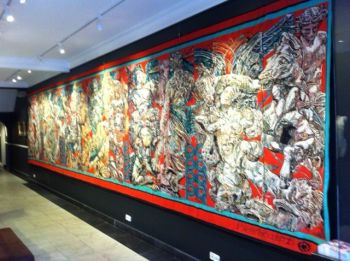
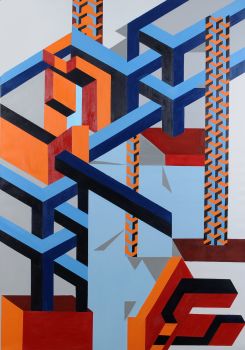
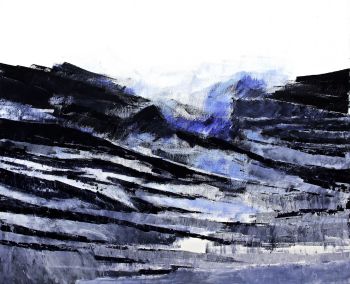
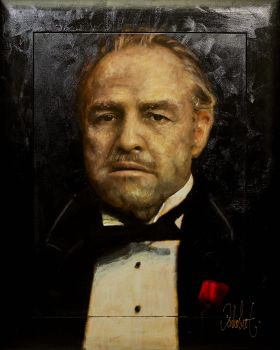
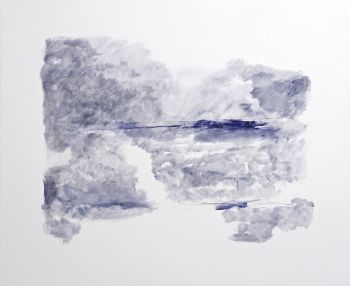
A handmade ‘Rölakan’ rug, model ‘Vårflöden’ (Spring flows) – JJ Vävateljén, Sweden 1960 - 1969
Judith Johansson
TextilLana
180 ⨯ 230 cm
ConditionGood
€ 2.950
Van Kerkhoff Art
- Sobre la obra de arteA handmade ‘Rölakan’ (flat weave) rug, model ‘Vårflöden’ (Spring flows). Designed by Judith Johansson and handmade by her at JJ Vävateljén, Sweden ca 1960.
Rölakan rugs are a traditional type of Swedish flat-weave rug that have been produced for centuries. Unlike pile rugs, rölakan rugs are woven flat, without knots, using a tapestry-like technique. The weft threads are passed over and under the warp threads to create the design. Designs are usually geometric or stylized, sometimes inspired by folk art, nature, or Scandinavian motifs. Traditional patterns include diamonds, stripes, and floral or tree motifs.
In the 20th century, designers like Judith Johansson and others modernized the technique, incorporating contemporary motifs and abstract designs while maintaining traditional weaving methods. Today, rölakan rugs are appreciated both as folk art and design objects and vintage Rölakan rugs are highly collectible, particularly mid-century examples from Swedish ateliers that blended traditional craft with modern design aesthetics.
About Judith Johansson
Judith Johansson (1916 Trollhättan – 1993 Knäred) was a Swedish textile artist renowned for her contributions to mid-20th-century Scandinavian rug design. Born in 1916 in southern Sweden, she grew up in a rural environment that deeply influenced her aesthetic sensibilities. Her maternal grandmother, a skilled weaver, introduced her to the craft at an early age, instilling in her a lifelong appreciation for textiles.
In 1937, Judith married John Johansson, and together they established JJ Vävateljén, a weaving studio in Knäred, Halland. Over the next five decades, they produced an extensive collection of over 400 rug and tapestry designs, both ecclesiastical and secular. Their work was characterized by a harmonious blend of traditional Swedish craftsmanship and modern design principles.
Johansson’s designs often drew inspiration from the natural landscapes of Sweden, incorporating elements such as rolling hills, forests, and lakes into her compositions. She employed a variety of weaving techniques, including the traditional Swedish flat-weave method known as röllakan, to create textures that added depth and interest to her pieces.
Throughout her career, Johansson’s work was recognized for its artistic merit and technical proficiency. Her rugs and tapestries were featured in various exhibitions and were sought after by collectors and institutions alike. In the mid-1980s, her daughter took over the atelier, continuing the family legacy in textile design.
Judith Johansson passed away in 1993, leaving behind a legacy of finely crafted textiles that continue to be celebrated for their beauty and craftsmanship.
Marked
Signed "JJ"
Execution
JJ Vävateljén, Sweden ca 1960
Condition
Good original condition. Wear consistent with age and use, Rewired.
Literature
Torsten Andersson, JJ Så vävdes ett livsverk
Dimensions
Width 180 cm
Length 230 cm - Sobre el artista
Judith Johansson (1916-1993) fue una influyente artista textil, diseñadora y tejedora sueca, conocida por sus alfombras y tapices de tejido plano que unen la artesanía tradicional escandinava con el diseño moderno de mediados del siglo XX. Activa principalmente desde finales de la década de 1940 hasta mediados de la de 1960, Johansson creó una extensa colección de textiles, tanto eclesiásticos como profanos, que hoy se consideran obras ejemplares del arte textil moderno sueco.
Nacida en un pequeño pueblo rural del sur de Suecia, una región reconocida por sus antiguas tradiciones textiles y de tejido, Judith Johansson mantuvo una estrecha conexión con su entorno local durante toda su vida. Estableció su taller en esta zona, donde vivió y trabajó durante décadas. El taller se convirtió en un centro de producción creativa y fue continuado por su hija a mediados de la década de 1980, lo que subraya el carácter intergeneracional del legado artístico de Johansson. Johansson desempeñó un papel activo en el resurgimiento regional de las alfombras decorativas de tejido plano röllakan y los textiles, contribuyendo significativamente al resurgimiento del diseño textil sueco en la posguerra.
Johansson desarrolló un proceso de diseño distintivo en el que tradujo delicados bocetos en acuarela a patrones de tejido contemporáneos. Cientos de estas acuarelas originales aún se conservan en su taller, ofreciendo una perspectiva excepcional de su método creativo y pensamiento visual. Si bien gran parte de su obra se inspira en la campiña sueca —sus ritmos, colores y formas naturales—, también produjo audaces composiciones geométricas y estilizadas abstracciones florales que la vinculan firmemente con la estética moderna de mediados de siglo.
Entre sus obras más innovadoras se encuentran diseños experimentales como la alfombra Tjärmark, caracterizada por composiciones sin bordes y paletas de colores ricos en tonos gema que reflejan el espíritu del modernismo escandinavo. Sus textiles equilibran estructura y suavidad, tradición y experimentación, lo que los hace decorativos y conceptualmente vanguardistas.
Los logros artísticos de Judith Johansson fueron reconocidos formalmente en la década de 1980, cuando recibió varios premios distinguidos por su contribución al arte textil sueco. Las obras que diseñó y tejió llevan el sello "JJ", una firma que hoy en día simboliza autenticidad, artesanía y calidad duradera. Johansson es ampliamente reconocida como una figura importante del diseño sueco del siglo XX, cuyas alfombras y tapices siguen siendo apreciados por coleccionistas, instituciones y admiradores de los textiles modernos escandinavos.

¿Está interesado en comprar esta obra de arte?
Artwork details
Related artworks
Kurt Østervig
A Brazilian rosewood sideboard with bar – KP Møbler, Denmark1960 - 1969
Precio a consultarVan Kerkhoff Art
Tapio Wirkkala
Two rare Art-objects, model 3585 & 3586 – Iittala, Finland1956
Precio a consultarVan Kerkhoff Art
Arne Jacobsen
A vintage ‘Swan’ sofa, model 3321 – Fritz Hansen, Denmark1970 - 1979
Precio a consultarVan Kerkhoff Art
1 - 4 / 24- 1 - 4 / 24
- 1 - 4 / 24
Geert van Fastenhout
“Painting no. 7”, 2000 – oil on linnen, framed2000
Precio a consultarVan Kerkhoff Art
1 - 4 / 12