A Japanese Bronze Flower Vase, Edo Period (1603-1868) 1603 - 1868
Artista Desconocido
BronceMetal
18 cm, ø 14.30 cm
ConditionGood
€ 1.200
Menken Works of Art
- Sobre la obra de arteA fine Japanese bronze zun-shaped flower vase depicting the sages Xu You and Chao Fu.
Japan, Edo period (1603-1868), probably first half 17th century or 19th century.
This zun-shaped vessel, likely a flower vase, features a bowl-shaped body on a decorated foot, angular shoulders, and a trumpet-shaped mouth. The vase’s standout feature is the figural group on the shoulder, depicting two gentlemen and an ox in a scene from Chinese mythology. The design incorporates flower-like elements, with the segmented upper section resembling petals. The scene portrays Xu You and Chao Fu, two Chinese sages who lived during the reign of the Emperor Yao (c. 2356–2255 BC).
According to legend, the emperor Yao offered to give Xu You his throne. Xu You responded by saying that his ears had gotten dirty and washed them out with water from a waterfall to purify himself of worldly temptations. Chao Fu came to the same river to give his ox a drink but declared that he could not give his ox such dirty water and left, leading his ox away from the “contaminated” stream.
Despite the Chinese origin of the story, the vase's form and decoration suggest it was most likely made in 17th-century Japan. Its tall neck, trumpet-shaped mouth, and distinctly frontal orientation are characteristic of Japanese Edo-period bronzes, differing from traditional Chinese designs, which emphasize rounded bodies and encircling decoration.
This vase exemplifies the Japanese adaptation of Chinese art during the Edo period. Japanese artisans drew inspiration from late Ming Chinese designs, such as high-relief decorations and symbolic imagery, while adding their unique stylistic elements. As a result, the vase reflects a blend of Chinese influence and Japanese innovation, showcasing the cultural interplay between the two traditions.
Ref:
An identical vase is in the Phoenix Art Museum collection, Clague Collection Number 245, and illustrated in China’s Renaissance in Bronze – The Robert H. Clague Collection of Later Chinese Bronzes 1100-1900 (Robert D. Mowry, 1993), pp. 56-60, no. 10.
Another similar vase with slight variations is in the Dresden Zwinger collection, inventory number 17365.
Dimensions:
Height 18 cm, diameter mouth 14.3 cm.
Condition:
Very good condition with normal wear and a warm patina.
Worldwide registered and insured shipping.
Inv. No: MW162 - Sobre el artista
Puede suceder que un artista o creador sea desconocido.
Algunas obras no deben determinarse por quién está hecho o por (un grupo de) artesanos. Algunos ejemplos son estatuas de la Antigüedad, muebles, espejos o firmas que no son claras o legibles, pero también algunas obras no están firmadas en absoluto.
También puedes encontrar la siguiente descripción:
•"Atribuido a …." En su opinión, probablemente una obra del artista, al menos en parte.
•“Estudio de….” o “Taller de” En su opinión, una obra ejecutada en el estudio o taller del artista, posiblemente bajo su supervisión
•“Círculo de…” En su opinión, una obra del período del artista que muestra su influencia, estrechamente asociado con el artista pero no necesariamente su alumno.
•"Estilo de …." o “Seguidor de…”. En su opinión, una obra ejecutada al estilo del artista pero no necesariamente por un alumno; puede ser contemporáneo o casi contemporáneo
•"Manera de …." En su opinión una obra al estilo del artista pero de fecha posterior
•"Después …." En su opinión, una copia (de cualquier fecha) de una obra del artista
•“Firmado…”, “Fechado…” o “Inscrito” En su opinión, la obra ha sido firmada/fechada/inscrita por el artista. La adición de un signo de interrogación indica un elemento de duda.
•“Con firma…”, “Con fecha…”, “Con inscripción…” o “Lleva firma/fecha/inscripción” en su opinión la firma/fecha/inscripción ha sido añadida por alguien que no es el artista
¿Está interesado en comprar esta obra de arte?
Artwork details
Related artworks
Artista Desconocido
Dutch School pair of equestrian paintings 1650 - 1750
Precio a consultarGallerease Selected
1 - 4 / 12Artista Desconocido
A rare Sawasa ware book-form box and cover, Edo period, early 18th century1700 - 1750
Precio a consultarMenken Works of Art
Artista Desconocido
Set Arita 'dog training' plates, 18th century 1700 - 1730
Precio a consultarVerkoulen Oriental & European Antiques
1 - 3 / 3Artista Desconocido
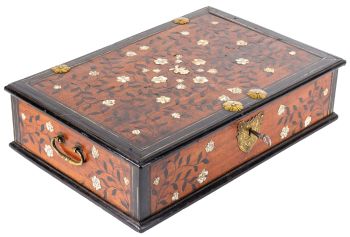
EIGHT NEO-GOTHIC STAINED GLASS WINDOWS WITH SUSPENSION EYELET, 19th C, BELGIUM.1850 - 1900
Precio a consultarSpectandum Gallery
Artista Desconocido
Indian colonial inlaid work box, 18th century1700 - 1750
Precio a consultarVerkoulen Oriental & European Antiques
Artista Desconocido
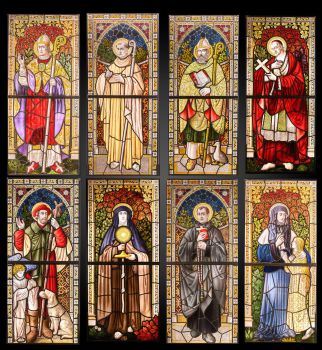
Indian colonial inlaid work box, 18th century1700 - 1750
Precio a consultarVerkoulen Oriental & European Antiques
Alvar Aalto
A set of four ‘Käsikranaatti’ (Hand Grenade) pendants, model A110 – Louis Poulsen 1960’s1960 - 1969
Precio a consultarVan Kerkhoff Art
1 - 4 / 24- 1 - 4 / 24
- 1 - 4 / 24
Artista Desconocido
Chinese gilt bronze censer, Xuande mark, 18th century, Qing dynasty18th century
Precio a consultarMenken Works of Art
Artista Desconocido
A pair of Dutch Colonial Solid Satinwood Chairs, Ceylon 18th century1725 - 1750
Precio a consultarMenken Works of Art
Artista Desconocido
A white jade ‘Lotus Seedpod and Bug’ carving, Qing dynasty, 18th century18th century
Precio a consultarMenken Works of Art
Artista Desconocido
A Chinese powder-blue-ground blue and white ‘Budai’ dish, Kangxi period1662 - 1722
Precio a consultarMenken Works of Art
1 - 4 / 12


![[copy] No Puedo Creerle a Nadie III by Hiroomi Ito](https://media-2.gallerease.com/images/4ae368a6-ec96-434e-9996-95a1be66f52d/350x350/copy-no-puedo-creerle-a-nadie-iii.jpg)