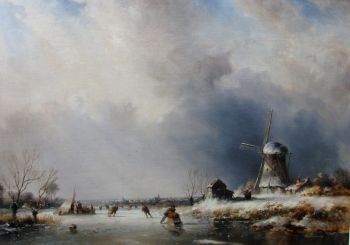
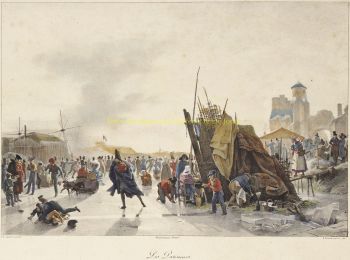
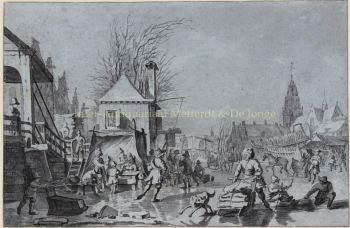
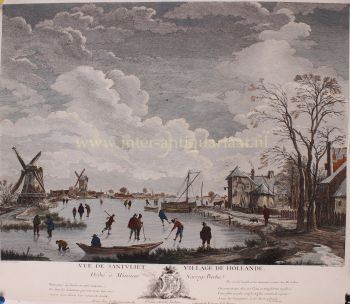
Kolf on the Haarlemmermeer - after Adriaen van de Velde, ca. 1770 by Artista Desconocido
Scroll to zoom, click for slideshow

Kolf on the Haarlemmermeer - after Adriaen van de Velde, ca. 1770 1770

Artista Desconocido

Papel
31.50 ⨯ 36.50 cm
€ 1.750

Inter-Antiquariaat Mefferdt & De Jonge

  • Sobre la obra de arte
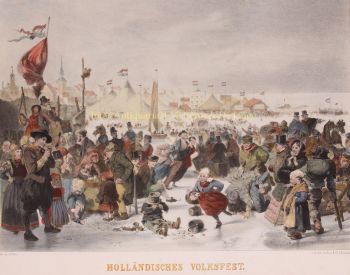
    “L’Amusemens De L’Hiver”, copper engraving by Jacques Aliamet (1726 – 1788) after a painting by Adriaen van de Velde. Published in Paris around 1770. Coloured by a later hand. Size (scene) approx. 31.5 x 36.5 cm. Winter scenes with a thick layer of snow and frozen canals and rivers full of joy on the ice have always been popular. The old masters liked painting them, and their popularity is reflected in the large number of prints made after their paintings and drawings. Even in the 19th century, engravers looked back to examples from the past, in France, Germany, and England. We see a group of men playing kolf on the Haarlemmermeer, a sport played in the Low Countries since the Middle Ages. In the 17th and 18th centuries, kolf gained popularity. The game was usually played in everyday shoes in the midst of the other people on the ice. Sometimes a kolf stick with a weighted and widened lower end was used, no longer than our current golf clubs. Other times, players wore skates, and the stick reached chest height, with the upper end covered with velvet or other material. Sometimes the goal was to hit the ball as far as possible or to strike a pole. The score was kept on the inside of the hat or carved with a knife on a twig. The ball was made of leather and filled with feathers. In the distance, the Grote Kerk or St.-Bavo church towers above the city of Haarlem. Price: Euro 1.750,- (incl. frame)
  • Sobre el artista

    Puede suceder que un artista o creador sea desconocido.

    Algunas obras no deben determinarse por quién está hecho o por (un grupo de) artesanos. Algunos ejemplos son estatuas de la Antigüedad, muebles, espejos o firmas que no son claras o legibles, pero también algunas obras no están firmadas en absoluto.

    También puedes encontrar la siguiente descripción:

    •"Atribuido a …." En su opinión, probablemente una obra del artista, al menos en parte.

    •“Estudio de….” o “Taller de” En su opinión, una obra ejecutada en el estudio o taller del artista, posiblemente bajo su supervisión

    •“Círculo de…” En su opinión, una obra del período del artista que muestra su influencia, estrechamente asociado con el artista pero no necesariamente su alumno.

    •"Estilo de …." o “Seguidor de…”. En su opinión, una obra ejecutada al estilo del artista pero no necesariamente por un alumno; puede ser contemporáneo o casi contemporáneo

    •"Manera de …." En su opinión una obra al estilo del artista pero de fecha posterior

    •"Después …." En su opinión, una copia (de cualquier fecha) de una obra del artista

    •“Firmado…”, “Fechado…” o “Inscrito” En su opinión, la obra ha sido firmada/fechada/inscrita por el artista. La adición de un signo de interrogación indica un elemento de duda.

    •“Con firma…”, “Con fecha…”, “Con inscripción…” o “Lleva firma/fecha/inscripción” en su opinión la firma/fecha/inscripción ha sido añadida por alguien que no es el artista

¿Está interesado en comprar esta obra de arte?