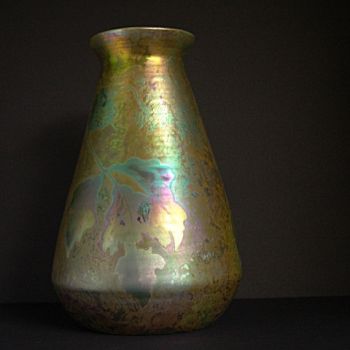
Daum Nancy – Tall Bryones / Bryonia dioica vase with applied berries by Daum Nancy

Daum Nancy – Tall Bryones / Bryonia dioica vase with applied berries 1902 - 1907

Daum Nancy

Vidrio
54 cm, ø 18 cm
ConditionNear mint
Precio a consultar

Antiques Emporium

  • Sobre la obra de arte
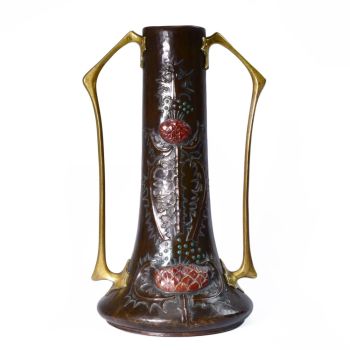
    This impressive Daum Nancy Bryones vase, crafted in the early years of the 20th century, stands at an extraordinary height of 54.5 cm and showcases the detailed beauty of the plant Bryonia dioica, also known as Bryony. This plant, commonly referred to as red bryony, is a climbing plant from the cucumber family, recognized for its deeply lobed leaves and striking red berries. Bryonia dioica is often found as a native climber in Europe and is a characteristic feature of rural landscapes.

    The design for this vase was created by Henri Bergé, a talented designer who played a prominent role in the Art Nouveau movement from the late 19th century, particularly through his work for Daum Nancy. Bergé, renowned for his botanical precision and artistic interpretations of nature, developed iconic designs that placed plants and flowers at the forefront. His creations were both technically advanced and aesthetically groundbreaking, making him an influential figure in the world of glass and decorative arts.

    The design drawing for this décor, made in pen and watercolor, is preserved in the archives of the Musée des Beaux-Arts in Nancy and is signed by Henri Bergé. This sketch highlights the meticulous and detailed approach Bergé took to his designs, capturing the expressive qualities of Bryonia dioica in a sublime manner.

    The vase itself is adorned with applied red glass ornaments representing the berries of the bryony, creating a striking and colorful contrast with the subtle green of the leaves. These decorative details highlight the delicate balance between form and color that characterizes Daum’s glass artistry from this period, enhancing the natural appearance of the piece. This vase, with its botanical decoration and impressive size, is a refined example of the collaboration between craftsmanship and artistic vision within the Art Nouveau movement.
  • Sobre el artista

    Daum Nancy es una de las casas de cristal más influyentes y refinadas de la historia del arte europeo. La marca fue fundada en Nancy en 1878 por Jean Daum, un ex notario que vio el potencial del emergente arte del vidrio en la región de Alsacia-Lorena. Lo que comenzó como una modesta cristalería se convirtió, bajo la dirección de sus hijos, Auguste y Antonin Daum, en el corazón palpitante del Art Nouveau francés.

    En contraste con la producción industrial en masa, Daum Nancy siempre optó por un enfoque casi poético del vidrio. Los hermanos experimentaron obsesivamente con la textura, las gradaciones de color y el juego de luz a través de múltiples capas de vidrio. Se hicieron famosos por su vidrio camafeo multicapa, en el que motivos florales, libélulas, paisajes y estaciones parecen crecer dentro del cristal. Cada pieza no es un objeto, sino una escultura: orgánica, onírica y profundamente entrelazada con la naturaleza.

    Daum colaboró ​​intensamente con artistas de la École de Nancy, como Émile Gallé, Henri Bergé y Jacques Grüber. Esta fusión entre artesanía y arte dio lugar a un nuevo y revolucionario tipo de arte en vidrio: sensual, técnicamente avanzado e increíblemente delicado. Alrededor de 1900, Daum ganó premios internacionales y se convirtió en una de las marcas más codiciadas del lujo y las artes decorativas.

    Hasta el día de hoy, Daum Nancy se mantiene fiel a sus orígenes: cristal elaborado íntegramente a mano, a menudo utilizando la misma técnica de pâte-de-verre redescubierta por la fábrica a principios del siglo XX. La marca es sinónimo de elegancia francesa, artesanía y una singular continuidad de identidad artística.

¿Está interesado en comprar esta obra de arte?